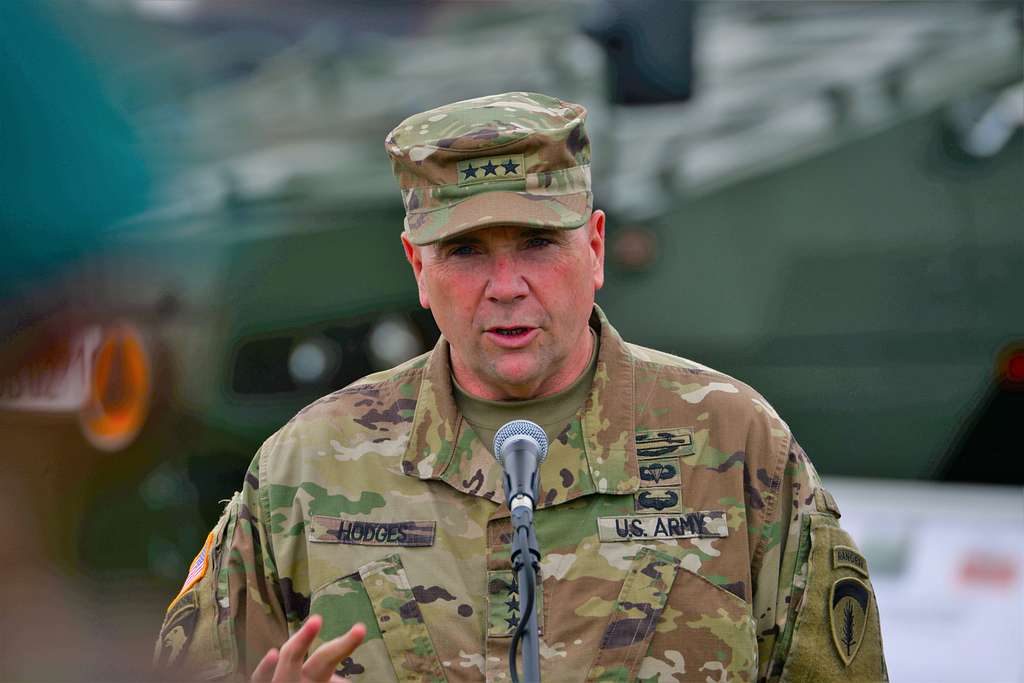
Retired Lieutenant General Ben Hodges, former commander of U.S. Army forces in Europe, has issued a stark warning to NATO allies: Europe must significantly strengthen its own defense capabilities, as the United States may soon be unable to defend both Europe and its strategic interests in the Pacific at the same time.
Speaking at the Warsaw Security Forum in Poland, Hodges cautioned that the U.S. could find itself at war with China within the next 15 years. In such a scenario, European nations will need to shoulder more responsibility for their own security, particularly in the face of ongoing Russian military aggression.
“The United States needs a very strong European pillar,” Hodges emphasized. “It’s not inevitable, but there is a very strong likelihood that we will be at war with China within the next 15 years.”
NATO’s Defense Burden and the China Threat
Hodges pointed out that the U.S. military does not have the capacity to fully support NATO in Europe while simultaneously preparing for a potential large-scale conflict with China in the Indo-Pacific region. His remarks echo concerns raised by American officials, including former President Donald Trump, about NATO burden-sharing and the lack of increased defense spending by some European nations.
“The U.S. simply cannot do everything it needs to do in both theaters,” Hodges said. “European allies must step up their contributions to collective defense.”
U.S. Commitment to NATO Remains Strong
Despite concerns about limited resources and shifting global focus, Hodges reassured the audience that the United States remains committed to NATO and to maintaining peace and stability in Europe.
“Our commitment to NATO is unshakable,” he stated. “We will continue to invest in Europe, conduct training exercises, rotate troops, and maintain a permanent presence.”
Hodges explained that while U.S. forces will continue to operate in Europe, they are also preparing for a possible confrontation in the Pacific. As tensions rise with China—particularly over disputed territories in the South China Sea and persistent allegations of cyber espionage and technology theft—the Pentagon is reorienting its strategic posture.
China’s Global Reach and European Vulnerability
Hodges also warned about China’s expanding global influence through economic and infrastructure investments. He highlighted Beijing’s strategic acquisitions, noting that China now controls over 10% of Europe’s seaports.
“China is not only stealing technology but also buying influence by funding critical infrastructure, particularly in Africa and Europe,” he said. “This poses long-term security risks that European nations can no longer afford to ignore.”
From Battlefield to Policy: Hodges’ Continued Role
Lt. Gen. Hodges served as the commanding general of U.S. Army Europe from 2014 to 2017. Today, he is a leading voice in transatlantic security policy as a strategic expert at the Center for European Policy Analysis (CEPA), a Washington-based think tank focused on strengthening U.S.-European relations.